
Open or Enclosed: Which One Does Your Car Actually Need?
We only haul open, and we will tell you when that is the wrong answer for your car. An honest look at what each one protects against and what it does not.
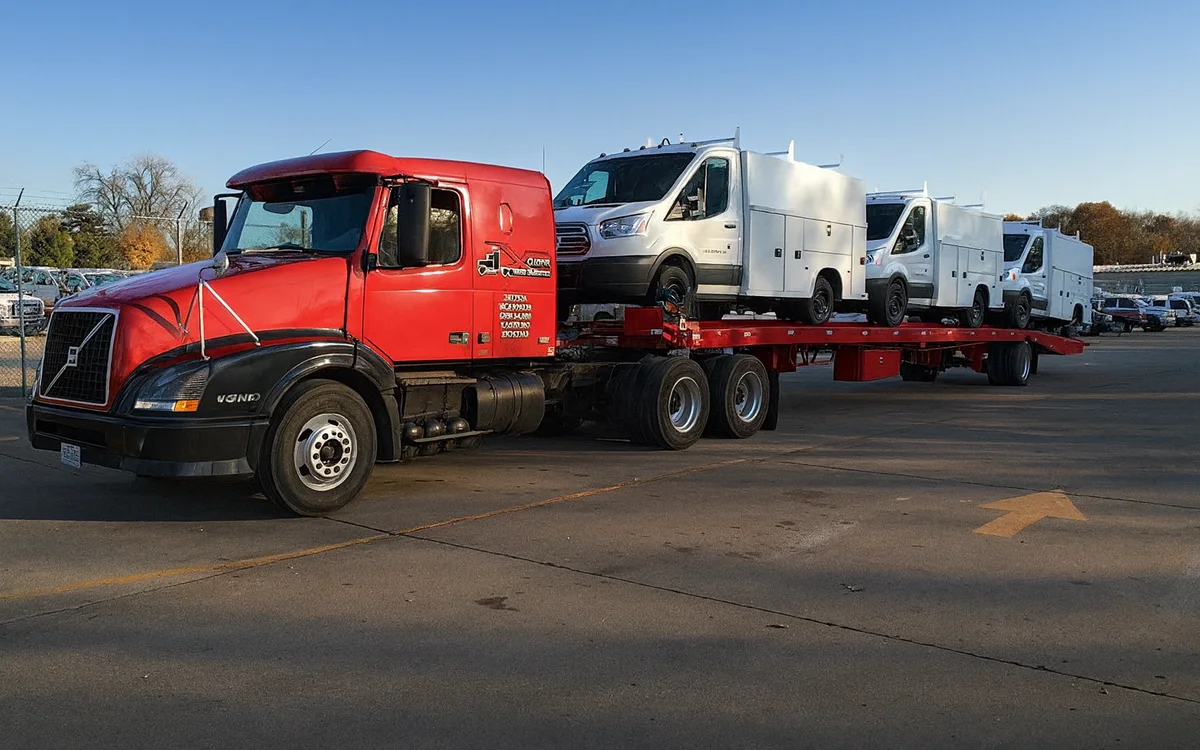
We run an open car hauler and we do not offer enclosed transport. That makes this a strange page for us to write, and it is exactly why it is worth writing: we have no enclosed trailer to sell you, so there is nothing to gain from telling you that you need one.
The honest position is that open transport is right for the overwhelming majority of cars, and that there is a real category of vehicle where it is not, and the second group is much smaller than the enclosed marketing suggests.
Here is what each option actually does, who genuinely needs which, and how to decide without paying for protection your car does not require.
The short version: if your car is insured for a replaceable amount and it already gets driven in the weather, open is correct. If it is irreplaceable, concours judged, or too low to load on ramps, pay for enclosed and do not call us.
What open transport actually is
An open car hauler is the trailer you have seen ten thousand times without noticing: a two level rig carrying vehicles on an uncovered deck, strapped down at the wheels.
It is not a budget option or a compromise. It is the default of the entire industry. Every new car on every dealer lot in the country arrived on one, which is worth sitting with for a moment. Manufacturers ship brand new vehicles worth a great deal of money this way because it is the correct method for moving cars.
What your car is exposed to is weather and road grime for the duration of the trip. Which is to say, precisely what it would be exposed to being driven the same distance, except that it is not accumulating miles, wear or highway stone chips at the front. Expect it to arrive dusty. Wash it. That is the end of it.
Availability is the other half of the argument. There are vastly more open trailers than enclosed ones, they carry more cars per load, and they run every lane in the country constantly. That means shorter waits, more date flexibility, and a lower price, all from the same underlying fact.
What you are actually buying
Enclosed transport puts the car inside a covered trailer. It is out of the weather, out of sight, and usually secured with soft straps over the tires rather than hooks on the chassis. Better enclosed carriers use a hydraulic liftgate rather than ramps, which matters a great deal for low cars.
What that genuinely protects against is a short and specific list: weather, road debris, and being seen. For a car where any of those three is a real problem, it is worth every penny.
The premium is significant, and the reason is supply rather than luxury. Enclosed trailers are far fewer, they carry perhaps two to six cars instead of nine or ten, and the wait for one on a given lane is longer. You are paying for scarcity and for a much smaller number of cars sharing the cost of the same trip.
Enclosed does not protect against the things people actually worry about. Loading damage, strap damage, and careless handling are all functions of the driver, not the roof. A conscientious operator on an open trailer will treat your car better than an indifferent one in an enclosed box.
Cars that genuinely need enclosed
This list is shorter than the internet suggests, and it is worth being honest about.
- Concours and show cars. If the car is judged, and a stone chip or water spotting costs points, the exposure is a real financial risk.
- Genuinely irreplaceable vehicles. Not expensive, irreplaceable. Numbers matching rarities, one of a handful survivors, anything where no amount of insurance money buys another one.
- Fresh paint or restoration. New paint takes time to fully cure and is more vulnerable than it looks. A car coming out of a body shop should be enclosed.
- Extremely low ground clearance. Some cars simply cannot be loaded on ramps without scraping. A liftgate is the answer, and that lives on enclosed trailers.
- Open cockpit or missing glass. A car that cannot be sealed against rain, or a project with no windshield, needs a roof.
- Genuine discretion. A car that should not be photographed sitting on a trailer at a truck stop. Rare, but real.
If your car is on that list, book enclosed and do not let price talk you out of it. We will say the same thing on the phone.
Cars that ship open every day
Everything else, which is most cars.
- Daily drivers and family cars. The car already lives outside. A trailer is not a downgrade from a driveway.
- Relocations and job moves. Standard vehicles going a long way, where the point is not driving them there.
- Snowbird cars. Southbound in fall, northbound in spring, twice a year for years. Enclosed on that schedule is a large recurring cost for no meaningful benefit. More on that on the snowbird vehicle transport page.
- Trucks and SUVs. Frequently too tall for an enclosed trailer anyway.
- Online purchases and dealer trades. The car is a used car, insured for a replaceable amount.
- Drivable classics. This is the one people argue about. A classic that gets driven to shows in the summer, gets rained on occasionally, and has honest paint does not need an enclosed trailer to go five hundred miles. A trailer queen does.
The test that works: if you would drive the car that distance yourself in ordinary weather without thinking about it, it ships open.
Shipping open?
Send both zip codes, the year make and model, whether it runs, and your window. If your car should be enclosed instead, we will tell you that first.
The thing to actually screen for
Here is the argument this whole page is building to. People spend enormous energy on the open versus enclosed question and very little on who is driving, and the second one affects the outcome far more.
Damage in transit is overwhelmingly a handling problem. Straps run over paint without padding. A car winched on at the wrong angle. Chassis hooks on a unibody where they do not belong. A vehicle loaded above a leaking one. Ramps used on a car that needed a different approach. None of that is prevented by a roof.
So the questions worth asking are about the operator, not the trailer. Who is the driver. Are you a carrier or a broker. What is your cargo insurance limit and can I see the certificate. How will you secure my specific car. What is your crash record. All of those are checkable, and the carrier versus broker post walks through how to verify a company on the federal system in about five minutes.
Our position, from an obviously interested party. We are a licensed carrier, USDOT 2817526 and MC-939339, hauling since 2015 with no crashes on the federal record in the last twenty four months. One truck, one driver, and the owner drives it. Open only. We would rather send you to an enclosed hauler than take a car that should not be on our deck.
How to make the call in two minutes
Work through these in order and the answer usually appears on the first or second one.
- Could you buy another one? If yes, open. If no, enclosed.
- Is it judged, freshly painted, or does it scrape on a driveway apron? Enclosed.
- Does it live outside now? Then a few days on a trailer changes nothing.
- Is the enclosed premium a meaningful fraction of the car’s value? That is usually your answer.
- Would enclosed just be for peace of mind? Fine, that is a real reason. Buy it knowingly rather than because a website implied open transport is risky.
If you land on open, we can probably help. Send both ends of the trip, the year make and model, whether it runs, and your window, and you will get a real number or a straight no. Our auto transport page covers what fits on the deck, and the cost guide explains what moves the price.
If you land on enclosed, go and book enclosed. That is the right call and we are not the right truck.