
The Snowbird’s Guide to Shipping Your Car South
Fall booking season starts in a few weeks and everyone on your lane wants the same two weeks in October. Here is how the trip works, what to do about the return leg, and how to get the car ready.
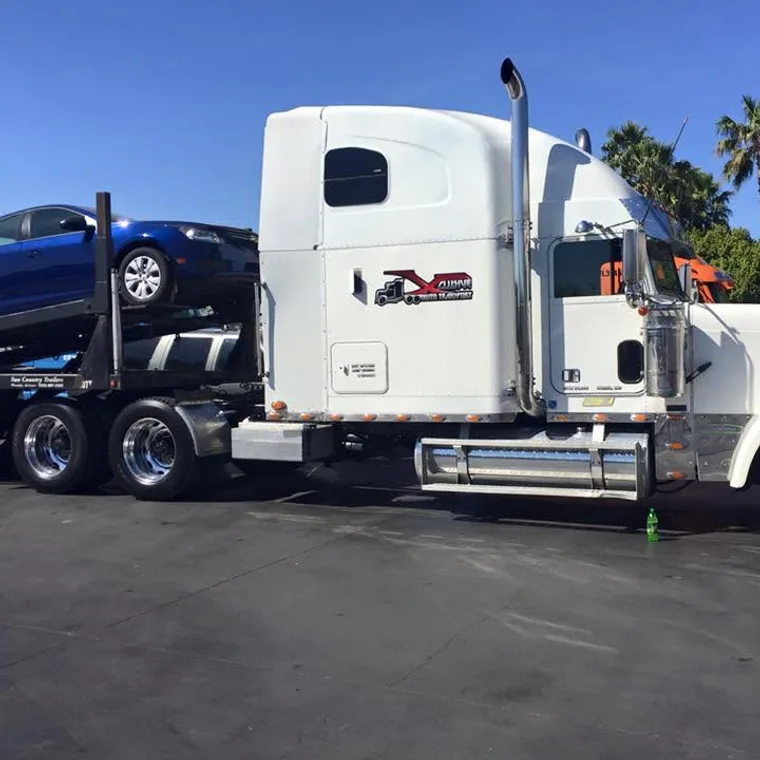
It is the middle of August. The first southbound calls of the season are already coming in, which is earlier than most people expect and exactly when it should be happening. Somebody in Missouri or Illinois has a place near Fort Myers waiting on them in late October, and they have decided this is the year they stop driving it themselves.
Twelve hundred miles is two long days behind the wheel, a hotel in the middle, and the same thing again in reverse five months later. Do that every year for a decade and it stops being a road trip. Shipping the car instead is straightforward. The only real trick to it is calling before the rest of your lane does.
What follows is the trip from our side of it. We are a licensed carrier based in Eldon, Missouri, one truck with the owner driving it, and snowbird runs fill a large part of the calendar from October through the New Year. Most of this applies whether you book with us or with somebody else.
One thing up front so nobody wastes a phone call. We run an open car hauler and we do not offer enclosed transport. For almost every snowbird car that is the right trailer anyway. If yours genuinely needs to be enclosed, we will say so and point you elsewhere rather than take the booking.
Everyone on your lane wants the same two weeks
Snowbird transport is not spread evenly across the year. It happens in two compressed waves and almost nothing moves in between. Southbound runs stack up from October through December, heaviest in the two weeks after the first real cold snap and again right before Thanksgiving. Northbound is March through May, with a hard cluster around the end of April when leases and seasonal rentals turn over.
Inside those waves the pressure gets narrower still. Half the people leaving central Missouri for the Gulf coast want the same ten days in late October, and there is exactly one truck here. The calendar fills in the order the calls come in. That is not a sales tactic, it is just arithmetic.
Which is why August matters. Right now the fall board is open and you can pick your week. By the first week of October you are taking what is left, and by mid November you are asking whether anything is available at all. More on how we run these lanes is on the snowbird vehicle transport page.
If you go south every year, book the same week every year. Repeat customers who lock their date in August get the date. It is the single easiest thing you can do to make this trip boring, which is what you want.
Book the return at the same time as the trip down
This is the piece most people leave undone, and it is the piece that causes the spring headaches. You arrange the car down in October, you enjoy the winter, and then in late March you start making calls into a market where every other snowbird on the Gulf is making the same calls in the same two weeks.
A one truck operation can actually hold the return leg. Same truck, same driver, booked in October for April, written on the calendar the day you book the trip down. We know in advance where the truck needs to be, and we plan the spring around the commitments already on the board.
A broker cannot promise you that, and it is worth understanding why rather than taking our word for it. A broker does not own a truck. Your return leg gets posted to a load board in the spring and whichever carrier accepts it is the carrier who shows up. They are not being dishonest when they say they will handle it. They simply do not know in October who is going to take the load in April, because that person has not bid on it yet. We are a carrier, not a broker, and there is more on how the company is built if that distinction matters to you.
How flying down and meeting the car actually works
The usual pattern: the car goes on the truck at your house in Missouri or Illinois, you fly down a few days later, and the car meets you in Florida. It is a clean way to do it and it is what most of our snowbird customers do.
The mechanics are simple. Somebody has to be physically present to release the car at pickup and somebody has to be present to receive it at delivery. It does not have to be you at both ends. A spouse, an adult child, a neighbor with a key, a property manager at the Florida end, all of that works as long as you tell us who it is and they have your authority to sign. Whoever is there walks the car with the driver, and the condition report gets signed at pickup and again at delivery. That document is what protects both of us.
Keys are the other thing. We need one key, not the whole ring, and it travels with the vehicle. Keep your spare on you when you fly. People lose more time to a single key sitting in a kitchen drawer in Missouri than to anything the truck does.
Do not book a non refundable flight against a single fixed hour until the window is confirmed. Transport runs in windows, not appointments. Weather, a closed interstate, or a delivery ahead of yours all move things by hours. Book the flight once the window is agreed, and leave yourself a day of slack on the Florida end.
Open transport is what nearly every snowbird car ships on
Open transport means the car travels on an open deck, uncovered, strapped down and exposed to the weather. That description makes some people nervous, so it is worth saying plainly: it is the same exposure the car gets sitting in your driveway, in a grocery store parking lot, or on the dealer lot where you bought it. New cars leave the factory this way. It is how the overwhelming majority of vehicles in this country move.
What you should expect is a dusty car. It arrives with road film on it the way it would after a long drive, because that is essentially what it just did. Run it through a wash when you get there and that is the end of it.
There is a real line where enclosed makes sense. A concours car, something with fresh show paint, a vehicle where the value sits in originality rather than in driving it. We do not haul those, and when somebody describes one on the phone we say so instead of taking the money. Everything else, the daily driver, the sedan, the SUV, the pickup you keep down there, goes open. Our general auto transport page covers what does and does not fit on the deck.
Getting the car ready for a long run
None of this takes more than half an hour and all of it saves aggravation later.
- Leave about a quarter tank of fuel. Enough to drive off the truck and reach a station, not enough to add unnecessary weight.
- Take personal items out. Cargo insurance covers the vehicle, not the contents. Golf clubs, a case of wine, boxes of clothes for the winter: none of that is covered, and loose weight in the cabin is not doing the car any favors either.
- Photograph all four sides plus the roof in daylight, the day before pickup. Get the wheels and the lower bumpers. We photograph the car too, so there is a shared record at both ends and no argument about a stone chip that was already there.
- Fold the mirrors in and retract or remove the antenna if it unscrews.
- Bag or remove the toll transponder. This one catches people every year. An active transponder riding a truck through four states will happily collect charges the whole way down. Put it in the foil bag it came in, or in the glovebox wrapped in foil, or just take it off the glass.
- Disable the alarm or tell us the sequence, and turn off any toll or valet mode that is going to argue with being loaded.
- Check the battery. A battery that is merely weak in Missouri in October is a dead battery in a Florida lot in November. If it is four or five years old, replace it before the trip rather than after.
Note anything that is already wrong. A leak, a sticky door, a window that will not go up, brakes that need a pump. Tell the driver at pickup. Nobody is judging a fifteen year old car, and a known issue written down at pickup is a non issue at delivery.
Planning this winter’s run?
Send both ends and rough dates, even if the dates are still loose. We will tell you what the fall calendar looks like and hold the spring return alongside it.
Guard shacks, low branches and narrow lanes
The southbound leg is rarely the hard part. Delivery is. A car hauler is long, tall and heavy, and a lot of Florida destinations were designed around golf carts and sedans.
Three things come up over and over. Guard shacks at gated communities, where the driver is a stranger with a commercial vehicle and no name on the visitor list. Call your gate ahead of the delivery date and have the carrier added, or arrange to meet the truck outside the gate yourself. Overhead growth, meaning live oaks and palms along the entry road that a car clears without noticing and a loaded trailer does not. And the lot itself, because a condo parking area with marked spaces and a single narrow lane gives a truck nowhere to turn around and nowhere to unload safely.
The fix is boring and it works: agree a nearby meeting spot in advance. A shopping center lot, a church parking area, a wide shoulder on a commercial street a few minutes away. You drive or get dropped there, the car comes off the deck with room to do it properly, and you drive it the last mile in yourself. Tell us the delivery address when you book and we will look at it before the day rather than on it.
What actually moves the price
We are not going to put numbers on a blog post, because a number written in August is a lie by November and every lane is different. What we can do is tell you honestly which levers matter, so you can read any quote you get with some sense of whether it is real.
- Season and timing. The largest single factor on this route. Southbound in peak fall and northbound in peak spring are the two busiest directions in the country. The same car on the same lane in a quiet week is a different job.
- Distance. Obvious, but not linear. Long runs cost more in total and less per mile than short ones.
- Round trip versus one way. Booking both legs together is worth doing on the schedule alone, and it is also the version of this trip that makes the most sense economically for everybody involved.
- Vehicle size and weight. A compact sedan and a three quarter ton crew cab do not occupy the same space or burn the same fuel.
- Whether it runs. A vehicle that drives on and off under its own power is a straightforward load. One that has to be winched is a different operation and needs to be flagged when you book, not discovered in the driveway.
- Access at both ends. A rural driveway with a turnaround, a city street with parking restrictions and a gated lot all take different amounts of time.
- Date flexibility. A three or four day window is easier to route than a single fixed Tuesday, and it shows up in the quote.
Give us the two ends, the vehicle, and roughly when, and you will get a real number for your actual lane. Send it over and we will tell you what the fall calendar looks like at the same time.
What to do about a car that sits for five months
Whichever end you are not at, a car is sitting still for most of half a year. That does more damage than the trip ever will, and it is the reason a lot of snowbirds ship one car instead of keeping one in each place.
If a vehicle is going to sit, a few things help. Put it on a battery tender if there is an outlet, or disconnect the negative terminal if there is not. Inflate the tires to the upper end of the recommended range, because flat spotting is real on a car that has not moved since March. Add fuel stabilizer and fill the tank most of the way to cut condensation. Close the windows, and put steel wool or a dryer sheet where mice would get in, particularly on a car sitting in a Missouri garage over winter. Do not cancel the insurance. Reduce it to storage coverage if your carrier offers that, but a lapse is a headache to unwind and leaves the car unprotected against everything that is not driving.
And if the answer turns out to be that you would rather have the car with you in both places, that is the whole point of booking both legs in one call. We are based in Eldon and run Missouri pickups most weeks, point to point anywhere in the lower 48.